Wedding Hair & Makeup: Style That Lasts
Hair and makeup are the two details you will study in every photo, so plan them instead of deciding last-minute. Book stylists early, hold the trial at the right moment, and be specific: a soft updo that holds all day and works with a veil beats something natural. The goal is a version of you that still looks like you at midnight, once the dancing starts.
The rule is simple: shape your hair and finish your makeup around the dress, the venue and the weather, then test both under real conditions before the day, not on it.
Book early, trial late
Stylists book by date and popular ones close peak weekends six to twelve months ahead, so lock yours in once the venue and date are fixed, before invitations go out. If several people are being styled, give the exact headcount and ask about early start times and travel for a remote venue. Hold the main trial four to eight weeks before the wedding, after your dress and veil arrive, and book it before a long day or an evening out so you can judge how everything holds through heat, food and dancing.
Bring more than photos of your face: front and back images of the dress, veil and headpiece, accessories, jewelry and shoes, plus two or three references rather than twenty, a venue photo, a note on the light, and your own foundation if you react to products.
- Book venue and date first, then stylists; peak dates go early.
- Main trial four to eight weeks out, once dress and veil are chosen.
- Book the trial before a long day or evening out to test longevity.
- Bring dress photos, veil, accessories, shoes and two or three references.
- A short second trial one to two weeks before confirms the changes.
A short second trial one to two weeks out confirms the veil placement, small tweaks and how the makeup photographs. Schedule family and bridesmaids separately so your trial stays focused.
Choose the style by length and texture
Start from what your hair actually does. Fine hair holds an updo better than loose waves and needs texture spray and gentle backcombing. Thick hair makes an updo feel heavy, so a partial or half-up style keeps volume without strain. Curly hair looks best worked with its pattern using a diffuser, not fought into straightness.
- Updos: cool neck, survive dancing and wind, suit almost any venue.
- Half-up, half-down: balances crown volume and length, frames a veil well.
- Worn down: romantic but tangles, flattens and can fight a veil.
- Braids: add grip and texture; best on humid or windy days.
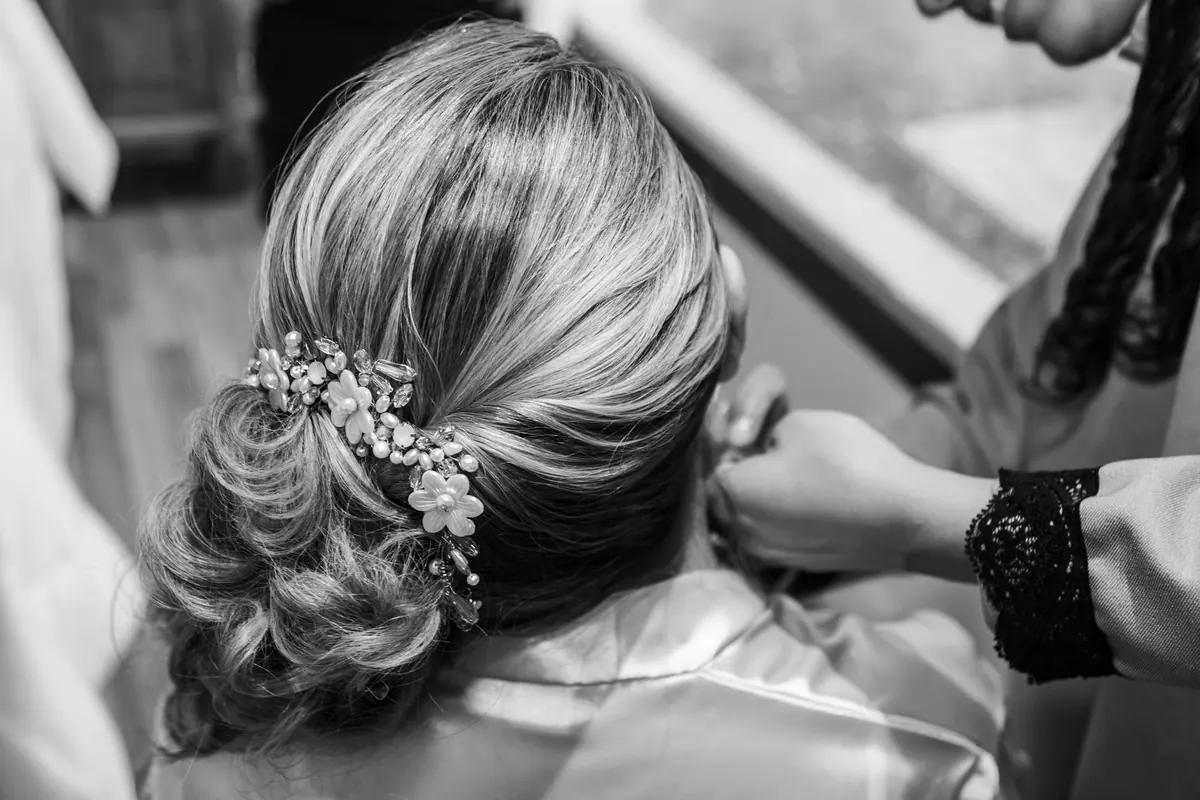
A summer outdoor ceremony rewards an updo; a cool indoor wedding can carry soft curls. If humidity is forecast, braids and structured updos outperform loose styles, so ask what your texture will do after hours outdoors. Ask for a look that can be adjusted rather than rebuilt, and agree which pins come out first when you let your hair down.
Coordinate hair with neckline and veil
Strapless and sweetheart tops look elegant with hair up or to one side, showing the collarbone and necklace. High collars and halter necks suit a sleek updo or low ponytail, and a one-shoulder dress balances best with hair swept to the opposite side, away from the bare shoulder.
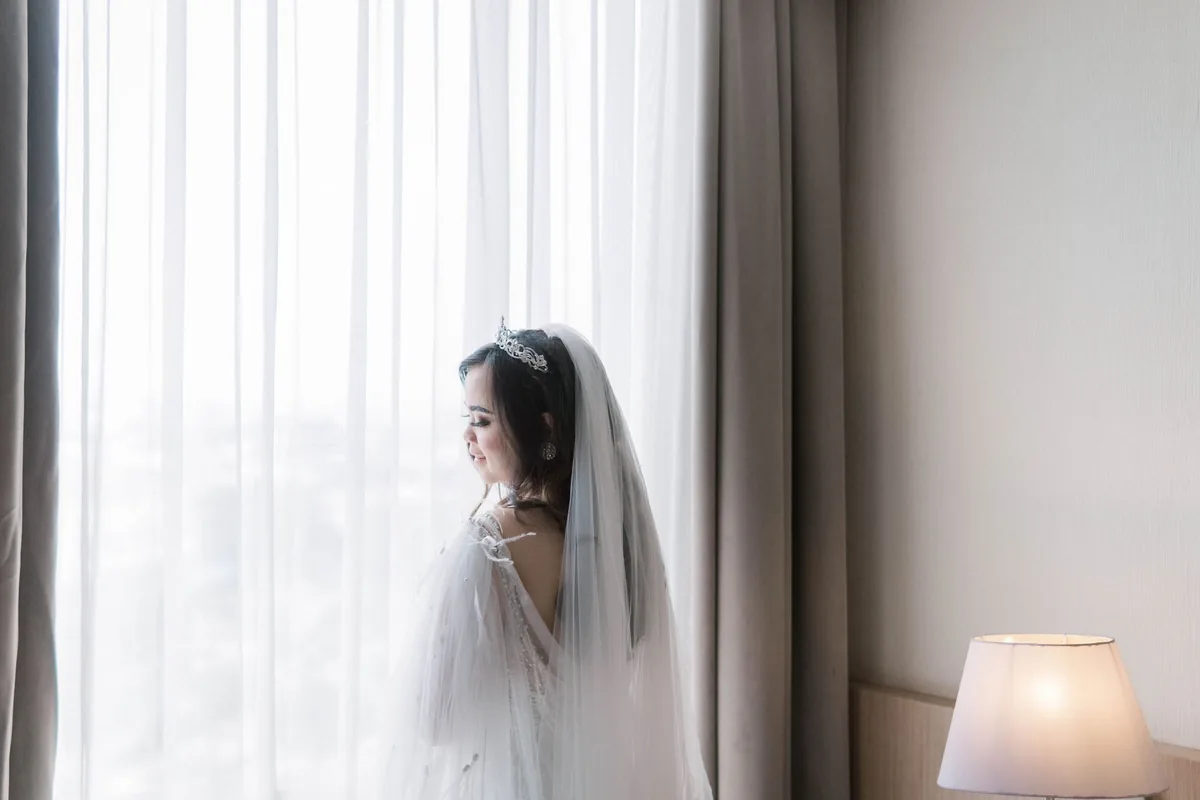
Veils anchor at a point on the crown, and that anchor decides how much height you can build behind it. A heavy cathedral veil needs a sturdy base, so an updo or half-up with pinned volume holds it better than loose hair. Attach the veil to its own comb so you can remove it without ruining the style.
- Strapless or sweetheart: hair up or side-swept.
- Halter or high collar: sleek updo or low pony.
- One-shoulder: sweep hair to the opposite side.
- Heavy veil: pin to a sturdy updo base and its own comb.
- Keep one focal point: veil, headpiece or earrings, not all three.
Makeup that lasts the whole day
Long wear comes from thin layers, not heavy product. Start with clean, hydrated skin and let each skincare step settle five to ten minutes. Apply primer, then build foundation in light layers, pressing rather than dragging. Set each layer with translucent powder, especially over the T-zone, and finish with a setting spray so skin looks like skin; two thin layers beat one heavy one every time.
Match formulas to the occasion: water-resistant mascara and budge-proof liner survive tears and heat, and a long-wear foundation lasts through a day of hugging. Set cream blush and highlighter lightly, and choose matte lipstick over gloss, with liner underneath and a gloss to refresh.
Build a touch-up kit: blotting paper, translucent powder, lipstick and liner, spot concealer, cotton swabs, hair pins, travel hairspray, a mini mirror and safety pins. Hand it to a trusted friend so it is always within reach, and replace anything you use up.
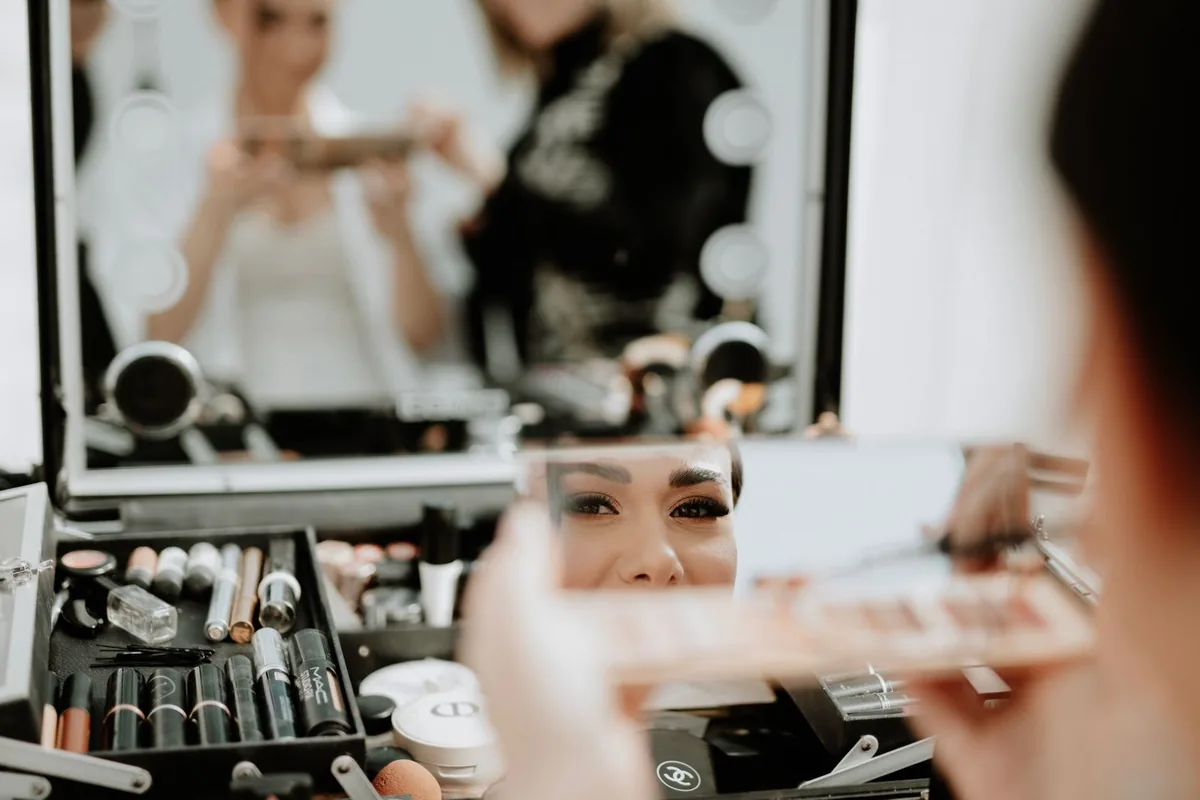
Look right on camera: flash, SPF and shine
Photos expose what the mirror hides. Foundations and powders with mineral sunscreens, especially titanium dioxide and zinc oxide, can reflect a camera flash and turn skin pale or grey, a problem called flashback. Test any product under direct flash before the wedding, and if it flares, switch or skip that layer.
A strong, wet-look highlighter can read as a bright white patch in flash photos, so keep it subtle and away from the centre of the face. Define brows a little more than usual, since flash flattens contrast, and let lips carry slightly more colour than your everyday shade.
Control shine without flattening the skin: powder the T-zone before posed photos and keep blotting paper for the reception. In bright sun, choose a matte finish and cover bare shoulders, since sunscreen white cast shows there too.
Skin, lashes, nails and your bridal party
Give your skin a runway: six months out settle a routine and see a dermatologist about persistent issues; three months out avoid harsh new treatments; two weeks out stop experimenting with new products or facials. In the final week, prioritise hydration and sleep, and shape brows a few days before; avoid waxing or a facial in the last few days.
Lashes transform photographs: strip lashes give the biggest effect and are reusable, individuals look lighter, and extensions last weeks but need an appointment and a refill. Test the adhesive and keep a spare pair.
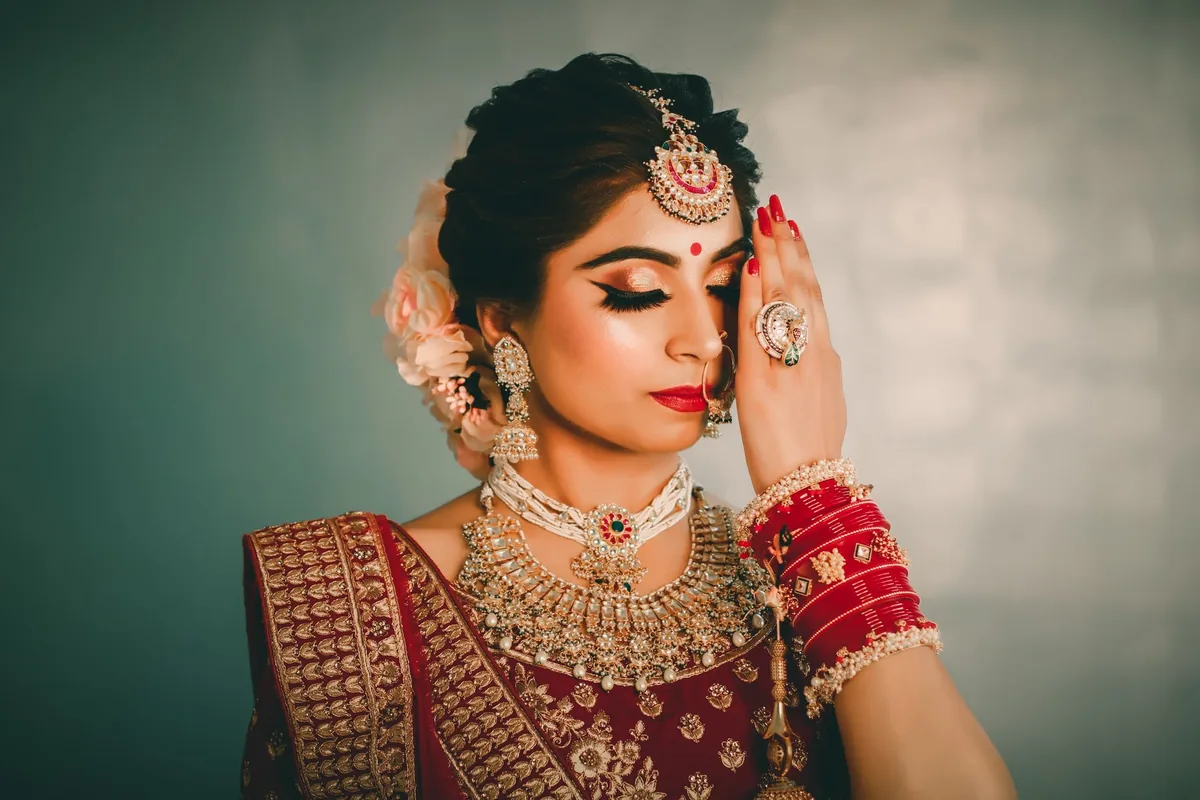
Do nails a few days ahead, not on the day, so a chip can be repaired calmly; gel lasts longest, but a simple natural manicure photographs well. Coordinate the colour with your bouquet or dress fabric rather than matching it exactly.
Your bridal party need not look identical: agree on a family of styles and a level of formality, share a reference photo and exact colours, and book staggered slots. If budget is tight, professional hair with practised DIY makeup is a sensible split; rehearse with anyone doing their own.
Before you finalise anything, review the mistakes that cause most wedding-day regret:
- Booking stylists late, after invitations.
- Trying a brand-new look with no trial.
- Skipping a full-day longevity test.
- Too much highlighter that flashes white in photos.
- New skincare or a facial in the final week.
- Washing hair the morning of; wash the day before.
- A veil that fights the hairstyle instead of a stable base.
- Forgetting the touch-up kit or leaving it in another room.
- Scheduling everyone at the same time with no buffer.
- Sunscreen white cast left on bare shoulders and the neck.