Choosing a Wedding Dress: Fit & Timing
For most couples the dress is the single biggest visual decision of the wedding day and the one with the longest lead time. The good news is that choosing well is a process rather than a stroke of luck. Get the silhouette right for your body and venue, pick a fabric that suits the season, and start trying dresses early enough to leave room for alterations. Everything else is detail you can adjust later.
Treat your first appointment as research, not a final decision. A wedding dress should feel like a better-dressed version of you, not a costume. Match the shape to how you stand, walk and sit; match the fabric to the weather and the floor you will walk on; and match the budget to the alterations you will almost certainly need.
Silhouettes: match body and venue
A-line, fitted through the bodice and flaring gently from the waist, is the most forgiving shape. It skims the hips and thighs, moves easily across grass, sand and stone, and rarely needs extreme alterations. If you are undecided, it is the safest start.
Ball gown and princess designs have a full, often crinolined skirt that is dramatic and formal. They photograph beautifully in ballrooms and grand churches, but are heavy and warm, and need space: check aisle width, dance-floor size and how comfortably you can sit for dinner.
Mermaid and trumpet gowns hug the hips, then flare below the knee. They emphasise curves and photograph dramatically, but restrict your stride, are hard to sit in, and depend on a near-perfect fit.
- A-line: flatters almost everyone; ideal on grass, sand and outdoors.
- Ball gown: formal and dramatic; needs a large venue and cool weather.
- Mermaid/trumpet: dramatic photos; hard to walk, sit and dance in.
- Sheath/column: sleek and comfortable; suits city and beach venues.
- Empire/high waist: seam under the bust, lengthens the body; comfortable and cool.
Sheath and column dresses follow the body line with little flare: comfortable, easy to move in, and modern in lofts, restaurants and beaches, though they show every line, so undergarments matter. Empire gowns place the seam just under the bust and flow down; they lengthen the leg, breathe well and suit hot climates or pregnancy, but offer less structure. As a rule, the more fitted the dress, the more the fit itself must be perfect, and the more you should prioritise comfort. Always try each shape on your feet: a silhouette that looks right on a hanger can behave very differently once you walk, sit and turn.
Fabrics, necklines and sleeves
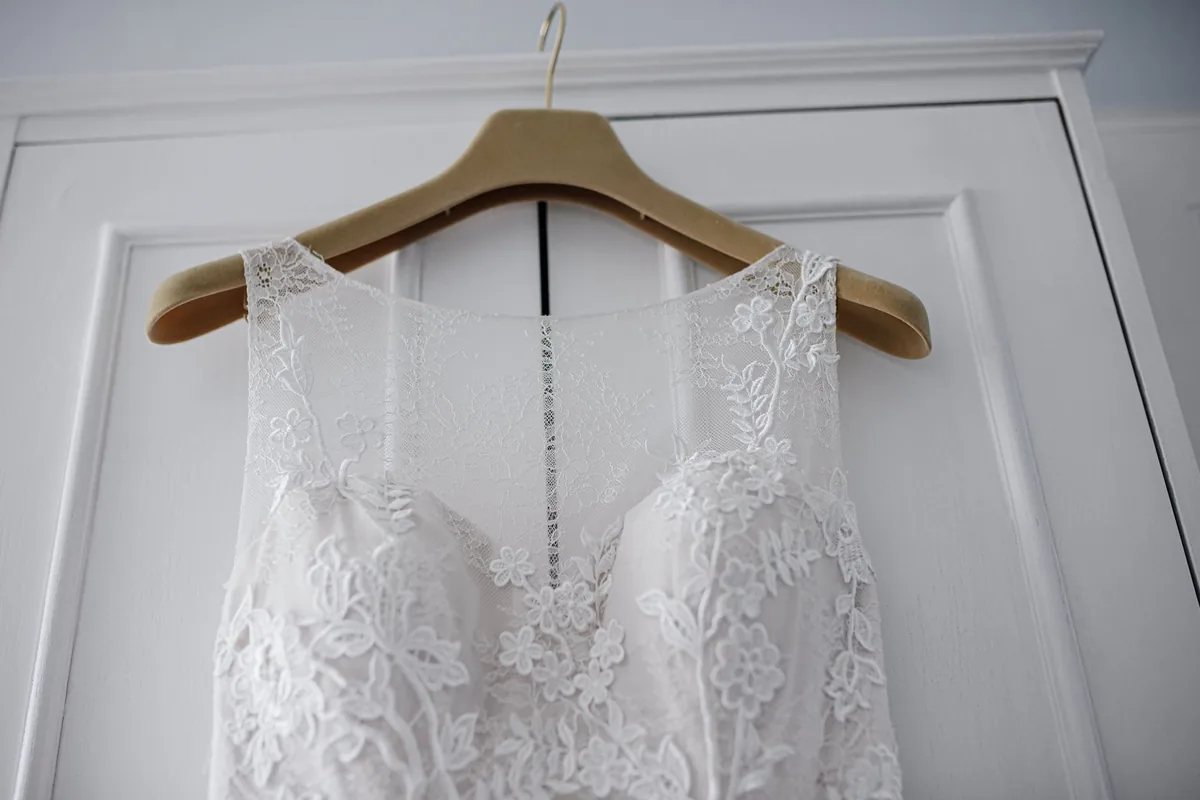
Fabric decides how a dress moves, how it photographs and how hot it feels. Satin is structured and lustrous; it holds a sculpted shape but marks easily and can flare under flash. Chiffon is light and airy, layered for coverage, and the obvious choice for summer. Lace adds texture and romance, usually over a lining; it hides minor fit issues but feels stiff and heavy when densely beaded. Crepe is matte and fluid, very modern, though it reveals every line. Tulle gives volume but scratches and traps heat.
Season shapes the shortlist. Summer favours chiffon, crepe and lighter lace with breathable linings; winter can carry satin, long sleeves and even velvet accents; spring and autumn take almost anything, with a wrap for the evening.
Necklines frame the face and control support. A sweetheart flatters most people but needs a structured bodice. A V-neck lengthens. A high or boat neck looks clean and modern. Off-the-shoulder frames the collarbone but restricts the arms. An illusion neckline uses sheer mesh for coverage without weight. Sleeves run from cap to full length; for a strapless gown that needs support, a fitted internal corset or detachable sleeves solve most problems.
Timeline, booking and the fitting room
Work backwards from your wedding date. For a bespoke gown, start nine to twelve months out; made-to-measure and most designer orders arrive in four to six months, plus six to eight weeks for alterations. Six to eight months before is a comfortable window for many made-to-order dresses. Ready-to-wear can be bought three to four months out, but sizes are limited and popular styles sell out.
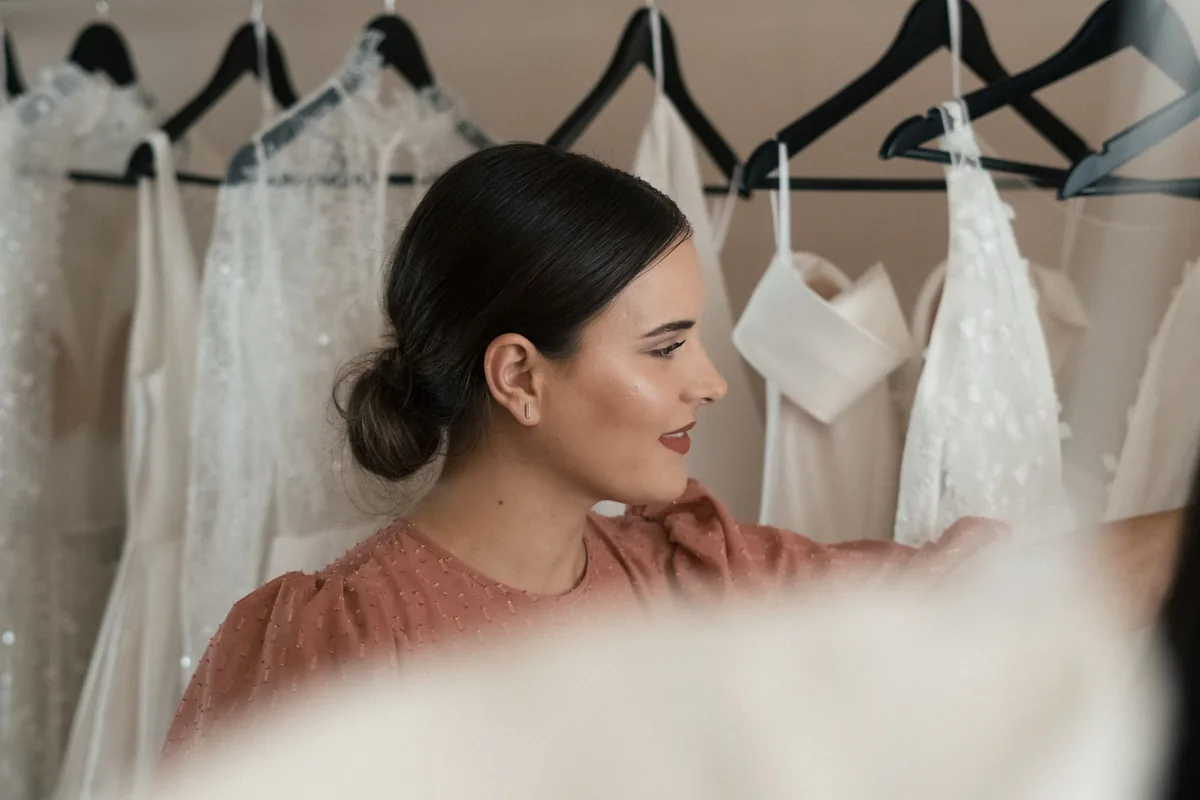
Book appointments as you would a good restaurant: weekday slots are quieter and give you more time; ask which designers the salon carries and whether it holds trunk shows. Keep your group to two or three honest, supportive people, and ask about sample sizes and whether the shop can order and alter your true size.
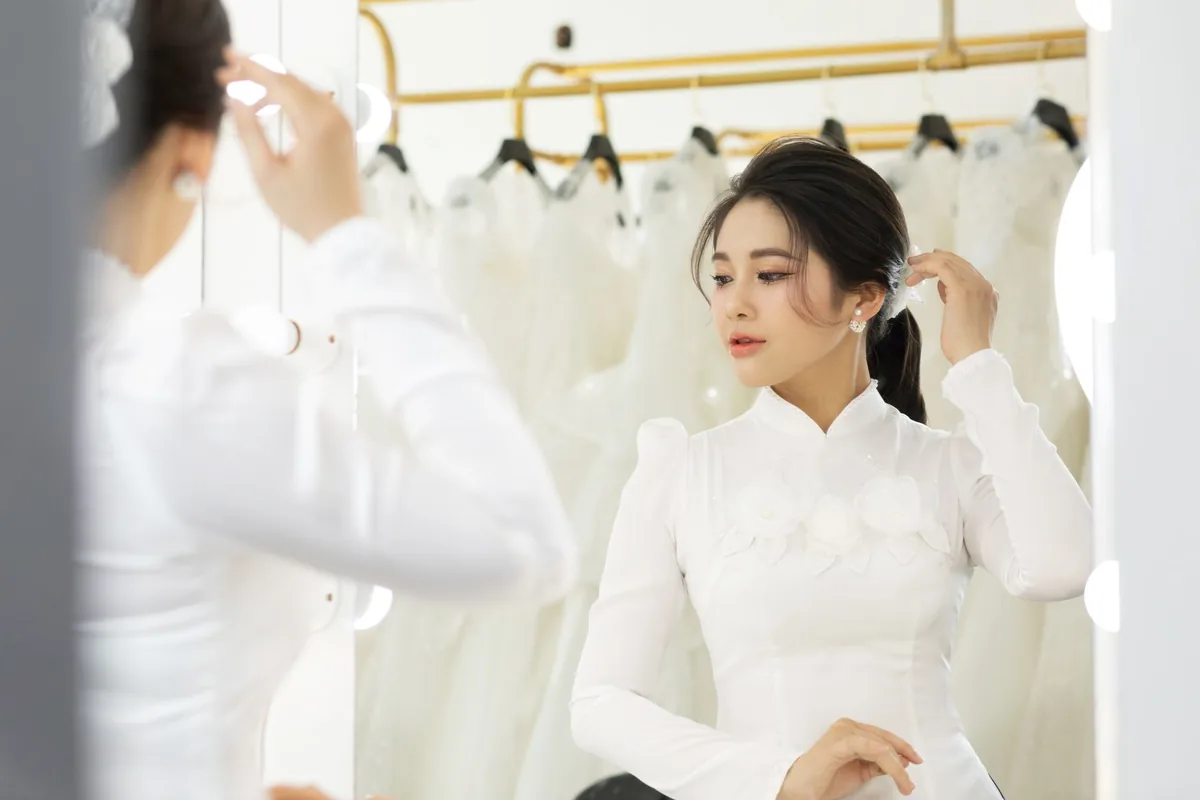
In the fitting room, bring nude seamless underwear, the bra or shapewear you plan to wear, and shoes at your expected heel height. Keep inspiration images but stay open-minded. The real test is motion: walk ten metres and turn; sit on a low chair; raise both arms; climb a few steps and sway. Photograph the dress in daylight from front, side and back, and film yourself walking.
Note every fix on paper: hem length, strap tension, bust support, sleeve restriction. A dress that photographs beautifully but hurts after twenty minutes is the wrong dress.
Budget, alterations and custom vs ready-to-wear
Set the number before you shop, and include alterations. Alterations typically run about fifteen to twenty per cent of the dress price; heavily beaded or lace gowns, and significant resizing, cost more. Ask for a written estimate and confirm what it covers.
Made-to-order uses a standard pattern in a chosen size and length, and is the middle path. Bespoke is drafted to your measurements with more control over fabric, length and detail, but costs more and takes longer. Ready-to-wear is quickest and cheapest and can be excellent as a reception dress, though sizes and colours are limited. Order the size that fits you now, not the size you hope to reach; taking a gown in is safer than letting it out.
Undergarments, a second look and photographs
Choose undergarments before your final fitting. Seamless shapewear smooths lines; sewn-in cups give support without straps; backless styles need adhesive or low-back solutions. Comfort across six to ten hours matters more than any single detail.
Many brides add a second dress for the reception: lighter, often shorter or a jumpsuit, and easier to dance in. Budget separately and buy it after the ceremony dress so it complements rather than competes.
Pure white can blow out highlights, so ivory and champagne often read richer on camera. Matte fabrics show detail better than high-gloss satin, which can flare under flash, and fine patterns can shimmer unpleasantly. Look at the dress in window light and under flash before you commit, and do your hair and makeup trial with the actual gown.
Common mistakes: a quick checklist
- Starting too late and leaving no time for alterations.
- Bringing too many opinions; take two or three trusted people.
- Ignoring comfort when walking, sitting and dancing.
- Forgetting an alterations budget of roughly fifteen to twenty per cent.
- Ordering a size too small in the hope of losing weight.
- Skipping the shoes and undergarments you will actually wear.
- Choosing a trend over the shape that suits your body.
- Overlooking the venue floor, the season and the light.
- Not photographing or filming yourself walking in the dress.
- Refusing to sit, climb or raise your arms during the fitting.