Backyard Wedding Planning: A Practical Guide
A backyard wedding looks like the cheapest line on the spreadsheet until you price what a venue normally hides inside one number: restrooms, power, lighting, staff, insurance and a rain plan. None of that is a reason to abandon the idea. It is a reason to cost it honestly before invitations go out.
The work below is ordered the way the decisions actually arrive. First, whether the site can legally and physically hold your guest count; then what has to be rented; then permits, weather, money and food. Couples who audit the site first usually save the most, because half of the decorative ideas die on the spot and the rest get cheaper once the constraints are known.
Run a site audit before you design anything
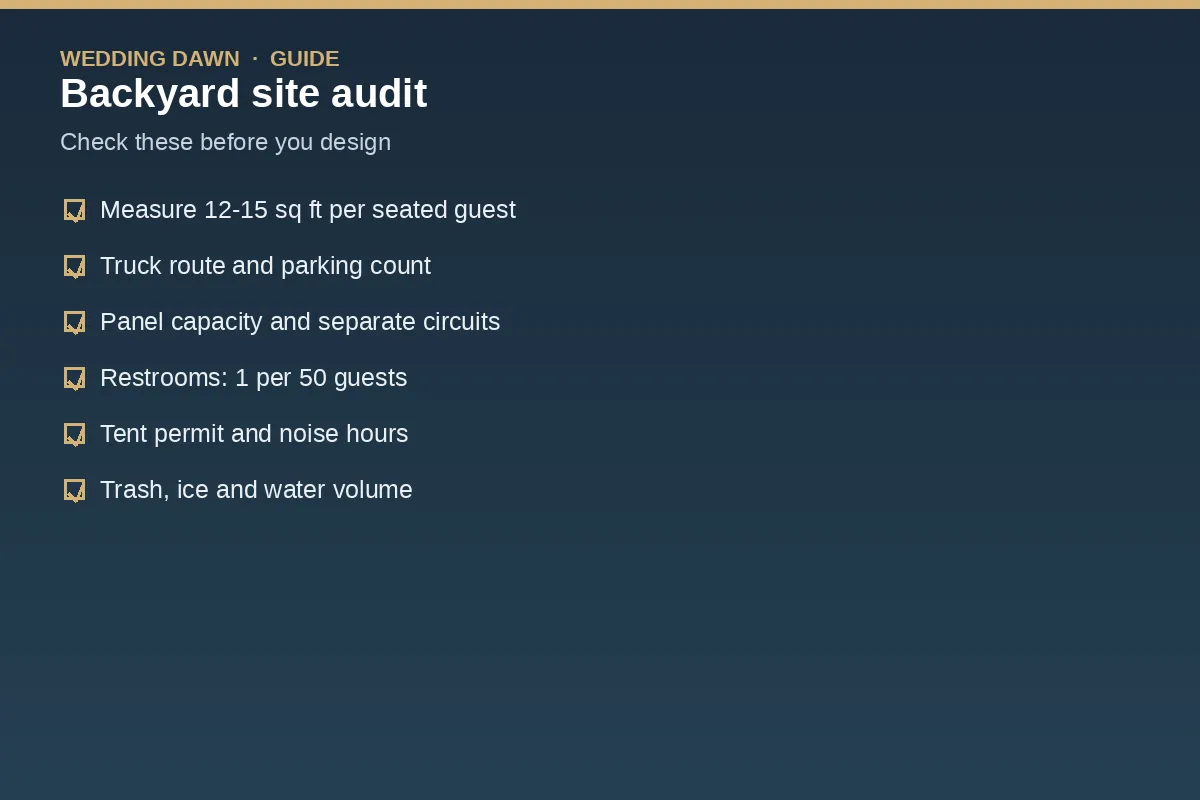
Walk the property with a clipboard and your real guest count. Measure the lawn, the patio, the driveway and the side yard separately, then draw them on graph paper. A seated dinner needs roughly twelve to fifteen square feet per guest once you count tables, chairs, aisles and a buffet, and a dance floor needs about two square feet per dancing guest on top of that. A sixty by forty foot lawn sounds generous until you place eight round tables and discover the caterer has nowhere to stage.
Access, parking and the last hundred feet
Check how a truck reaches the setup area. A caterer's van, a rental truck and a restroom trailer all need a surface that will not turn to mud, and a trailer needs a straight approach. Count legal parking within a five minute walk; if the number is under one space per two cars, price a shuttle instead of arguing with neighbors. Confirm that the path from parking to the ceremony is firm, lit after dark, and passable for a stroller or a wheelchair.
Power, water and light
Add up the watts before you promise the DJ anything. Catering equipment, coffee urns, heaters, string lights and a sound system can easily exceed what one household circuit will carry, and tripping a breaker in the middle of a toast is memorable for the wrong reason. Ask an electrician what the panel can spare, plan separate circuits for kitchen and entertainment, and budget a quiet generator as backup. Confirm one outdoor tap and a place to fill water dispensers; ice is cheaper bought in bulk than made on site.
Restrooms and waste
The house bathroom is not a plan for eighty guests. As a rule of thumb, allow one restroom fixture per fifty guests for an event of four hours, and more if alcohol is served. A rented luxury trailer typically costs several hundred to a couple of thousand dollars depending on size, delivery and service, and it needs a level spot and power. Plan trash and recycling volume too: a hundred guests generate several large bags of bottles, cans and plates, and someone has to haul them away the same night.
Permits, noise and the neighbor question
Backyard does not mean unregulated. Most towns limit amplified music after a certain hour, require a permit for a tent above a certain size, and have rules about temporary structures, fire lanes and parking on the street. Call the planning or clerk's office with your date, guest count and tent size, and ask specifically about noise, tents, parking, alcohol, and short-term rental rules if the property is rented. If there is a homeowners association, read its event rules before you fall in love with a plan.
Tell the neighbors early, in person, and give them a number to call if something goes wrong. An invitation to stop by for a drink costs less than a complaint at nine in the evening, and it buys goodwill you may need when forty cars appear on a dead-end street.
Build a weather plan you can execute in half an hour
Decide now what triggers the backup, who makes the call, and when. A workable rule: watch the forecast at seventy-two hours, decide at twenty-four, and hold a final go or no-go four hours before the ceremony. Write the backup as a sequence of moves, not a feeling: which furniture goes inside, where the bar moves, how guests are told, who drives the older guests to the door. A tent with sidewalls and a floor solves rain and shade but not wind, and most rental companies will not install in high wind.
Heat and cold are the more common failure. A few patio heaters and a basket of wraps extend an evening; a summer afternoon without shade does not. Put water, sunscreen and a shaded quiet spot on the plan as firmly as the cake.
Cost it like a venue, not like a party
Add the invisible line items: tables, chairs, linens, glassware, plates, tent, lighting, generator, restroom trailer, insurance rider, extra cleaning, and a day-of coordinator or at least a paid captain. Rentals alone commonly run a third to half of a backyard budget, and delivery, setup and pickup are separate charges. Compare the total with an all-inclusive venue for the same guest count. Sometimes the backyard wins, and sometimes the venue is cheaper once labor is counted.
Food and drink without a commercial kitchen
Ask any caterer what kitchen access they need before you book. Most want a sink, a prep surface, refrigeration and a power drop, and some will bring a field kitchen for a fee. Hold cold food below forty degrees Fahrenheit and hot food above one hundred and forty, and follow the two-hour rule for anything sitting out. Buffet lines need space on both sides; a single six-foot table is not enough for a hundred guests.
For drinks, rent glassware rather than buying plastic, batch two signature cocktails, and keep a separate water station away from the bar so the line does not block. Ice, garnish and a place to dump melted ice matter more than a long cocktail list. If you serve alcohol, check whether you need a one-day license or a bartender with liability coverage, and stop service an hour before the music ends.
Lighting deserves its own line in the budget. String lights look warm but rarely light a buffet or a path, and a dark walkway to the restroom is the most common safety complaint at a home wedding. Add a few focused fixtures over food, bar and stairs, put battery candles on tables, and test everything after sunset the week before.
The build, the day and the strike
A backyard wedding is a three-day construction project with a party in the middle. Book setup for the day before, keep a printed diagram for the crew, and assign one person who is allowed to make decisions so the couple is not asked where the napkins are. On the day, the coordinator owns the timeline; the family owns nothing but being present.
Plan the strike before the party. Rentals usually go back the next business day, and someone has to stack chairs at midnight, collect glassware and get the trash off the property. Hire the cleanup if the budget allows; it is the most commonly regretted saving.
When a backyard is the wrong choice
If the guest count passes about a hundred and twenty, the site has one narrow exit, the ground slopes, there is no shade and no indoor fallback, the logistics start to cost more than a venue. The honest alternative is a hybrid: ceremony in the garden, dinner at a nearby hall, or a smaller guest list with a longer party. Reducing the count is almost always cheaper than adding infrastructure.
A good backyard wedding feels effortless because the unglamorous work was done months earlier. Audit the site, price the rentals, call the town, write the rain plan, and the day itself can stay what it should be: dinner with the people you love, in a place that already means something.
Step by step
Audit the site with your real guest count
Measure usable lawn, patio and indoor fallback; check truck access, parking, power, water and restroom capacity before any design decisions.
Call the town about permits and noise
Ask about tent size limits, amplified music hours, parking rules and alcohol; get the answer from the office that enforces it, not from a forum.
Price every rental and service
Tables, chairs, linens, tent, lighting, generator, restroom trailer, insurance, cleaning, setup and pickup. Compare the total with an all-inclusive venue.
Write the weather trigger plan
Set a 72/24/4 hour decision schedule and list the exact moves, who makes the call and how guests are told.
Assign roles and book setup and strike
One decision-maker on site, one coordinator on the day, paid crew for build and cleanup if the budget allows.
Quick checklist
- Measure usable space at 12–15 sq ft per seated guest, plus dance floor
- Confirm a flat, firm route for catering and restroom trailers
- Count legal parking within a five minute walk or price a shuttle
- Ask an electrician what the panel can spare and plan separate circuits
- Book restrooms at one fixture per 50 guests, more with alcohol
- Call the town about tents, noise hours, parking and alcohol
- Check the homeowners association or rental event rules
- Tell neighbors in person and leave a contact number
- Get an insurance rider or event policy quote
- Set 72/24/4 hour weather decision points and write the moves
- Plan ice, water station, trash and recycling volume
- Book setup the day before and strike the day after
- Name one on-site decision-maker and one day-of coordinator
- Get rental delivery, setup and pickup charges in writing
FAQ
How many guests can a backyard realistically hold?
Most residential yards handle 60 to 100 guests comfortably with a tent, rentals and a restroom trailer. Past about 120, parking, egress and restroom logistics usually push the cost above a venue.
Do I need a permit for a tent in the backyard?
Often yes. Many towns require a permit above roughly 200 to 400 square feet, and some require flame certificates or setback from property lines. Ask the local fire or planning office with the exact tent size.
Is a backyard wedding actually cheaper?
Only if you count labor honestly. Rentals, restrooms, power, insurance and cleanup often reach a third to half of the budget. Compare the all-in total with a venue for the same guest count before deciding.
What if it rains?
Decide at 24 hours and hold a final call four hours out. Have a written sequence: which furniture moves inside, where the bar goes, who tells guests, and whether the tent can take sidewalls and a floor.
How do we handle alcohol legally?
Rules vary by state and county. Some require a one-day license, some require a licensed bartender with liability insurance, and some prohibit sales but allow hosting. Confirm with the local alcohol control office and stop service an hour before the end.
When should setup and cleanup happen?
Book setup for the day before so the morning is calm, and plan strike for the next business day. Rentals usually need to be stacked, counted and returned, and trash has to leave the property the same night.
Sources
- USDA FSIS — Cooking for Groups Food holding temperatures and the two-hour rule, checked 2026-11.
- Ready.gov — Severe Weather Household severe weather planning, used for the trigger-plan structure.
- National Weather Service Forecast and watch/warning definitions used for the 72/24/4 hour decision points.