Wedding Accommodation Guide: Where to Stay
Where you stay during the wedding weekend can shape the whole experience. Late nights, early mornings, and tired guests all trace back to the choice of accommodation. This guide walks you through the main options, how to compare them, and how to book with confidence.
Hotels: The all-inclusive choice
Hotels are the most convenient option for wedding guests. They often offer shuttle services, on-site catering, and easy coordination for ceremonies and receptions. Look for hotels with wedding packages that include room blocks, catering discounts, and dedicated event planners. The downside is higher per-night rates and less flexibility for large groups.
Before you commit to a host hotel, ask three questions: how many rooms the block actually holds, what happens to unreserved rooms after the cutoff date, and whether the shuttle runs on your schedule or only on a fixed loop. A block that sounds generous can shrink quickly once other guests book, so put the exact room count and release date in writing.
Compare the total weekend cost, not the nightly rate. Resort fees, parking, breakfast, and local taxes can add 20 to 35 percent. Ask for a written estimate for two nights across the room types your guests will actually book, and confirm whether those rates include breakfast.
Vacation rentals: Space and savings
Airbnbs, Vrbo, and similar rentals offer more space, kitchens, and often a lower per-person cost. This is ideal for larger groups, families with kids, or couples who want a more private setting. The trade-offs include less coordination support from the property owner, no dedicated shuttle service, and potential issues with parking or noise complaints.
Read the fine print on occupancy and events. Many listings cap overnight guests well below the number who can stand in the living room, and some prohibit gatherings entirely. Cleaning fees, service fees, and minimum-night stays can erase the per-person savings on a two-night wedding. Add every fee before you compare.
Family homes: A personal touch
Renting a family home or guest house can feel like a mini wedding weekend. It works well for multi-generational groups, out-of-town relatives, or couples who want to avoid hotel crowds. Benefits include full kitchens, multiple bedrooms, and a more intimate atmosphere. You will need to handle logistics yourself, and there may be stricter rules on occupancy and quiet hours.
This option works best when one family member owns the logistics: keys, arrival times, groceries, and the group chat. Confirm the bed configuration early, because a listing that sleeps twelve often means four beds and a lot of air mattresses.
Alternative options
Consider boutique inns, converted barns, or even camping sites if your wedding theme fits. These options can be memorable and budget-friendly, but you must verify amenities like bathrooms, Wi-Fi, and parking. Always read reviews carefully and confirm accessibility for guests with mobility needs.
Boutique inns often include breakfast and a common room, which can replace a separate welcome party. Camping and glamping can be fun for a younger crowd, but they need a clear plan for rain, bathrooms, and guests who will not camp at any price.
How many rooms do you actually need?
Start from the guest list, not from a guess. Count the households that must travel more than an hour, then subtract local guests who will drive home. Add one room for every four single out-of-town guests willing to share, and keep two spare rooms for last-minute changes.
- Count households, not invitations: a family of five needs one room, not five.
- Ask about children sharing with parents before you reserve extra suites.
- Keep two accessible rooms in the block if any guest uses a walker or wheelchair.
- Add a 10 percent buffer; unused rooms in a courtesy block cost nothing if released on time.
Room blocks, courtesy holds, and shuttle math
A courtesy block holds rooms without financial risk until a cutoff date, while a guaranteed block makes you responsible for unsold rooms. For most weddings, courtesy blocks are safer. If you sign a guarantee, cap it at a number you could genuinely afford to lose.
Shuttle math is simpler than it looks. One bus typically carries 40 to 55 seated passengers and can make two or three round trips per hour. If 120 guests need transport from two hotels, you need either two buses or a staggered schedule. Always price the last bus of the night, because that is the one people actually use.
- Confirm the last departure time and whether the shuttle waits for late guests.
- Ask whether car seats are provided if children will ride.
- Give drivers a printed schedule and a phone number for the coordinator.
Comparing costs without fooling yourself
Build one row per property and one column per cost. Include the room rate, taxes, resort or cleaning fees, parking, breakfast, shuttle, and any minimum spend. Then divide by the number of guests actually housed. The cheapest nightly rate often loses once fees and transport are included.
- Two-night total for the group, not the advertised nightly rate.
- Distance and travel time to the ceremony and reception.
- Cancellation deadlines and refund percentages.
- Whether breakfast, parking, or a welcome bag is included.
Accessibility and older guests
Accessibility is not only about wheelchairs. Ask about step-free entrances, elevator size, grab bars, shower benches, and the distance from parking to the lobby. For older guests, a ground-floor room near an elevator matters more than a view.
Kids, pets, and quiet hours
If families are traveling, confirm cribs, high chairs, and pool rules. Pet-friendly policies vary by room type and often carry a per-night fee. Quiet hours matter most the night before the wedding, when everyone needs sleep.
What to check in the contract
- Cutoff date and release terms for unreserved rooms.
- Attrition clause: the percentage of the block you must fill.
- Deposit, cancellation, and refund schedule.
- Who pays for damages, and how disputes are handled.
- Shuttle timing, capacity, and overtime rates.
- Whether outside food, drink, or decor is allowed.
A realistic booking timeline
Twelve months out, reserve the block and the shuttle. Nine months out, share booking instructions with guests. Six months out, confirm the room list and add a second hotel if the first fills. Two months out, release unused rooms and lock the shuttle schedule.
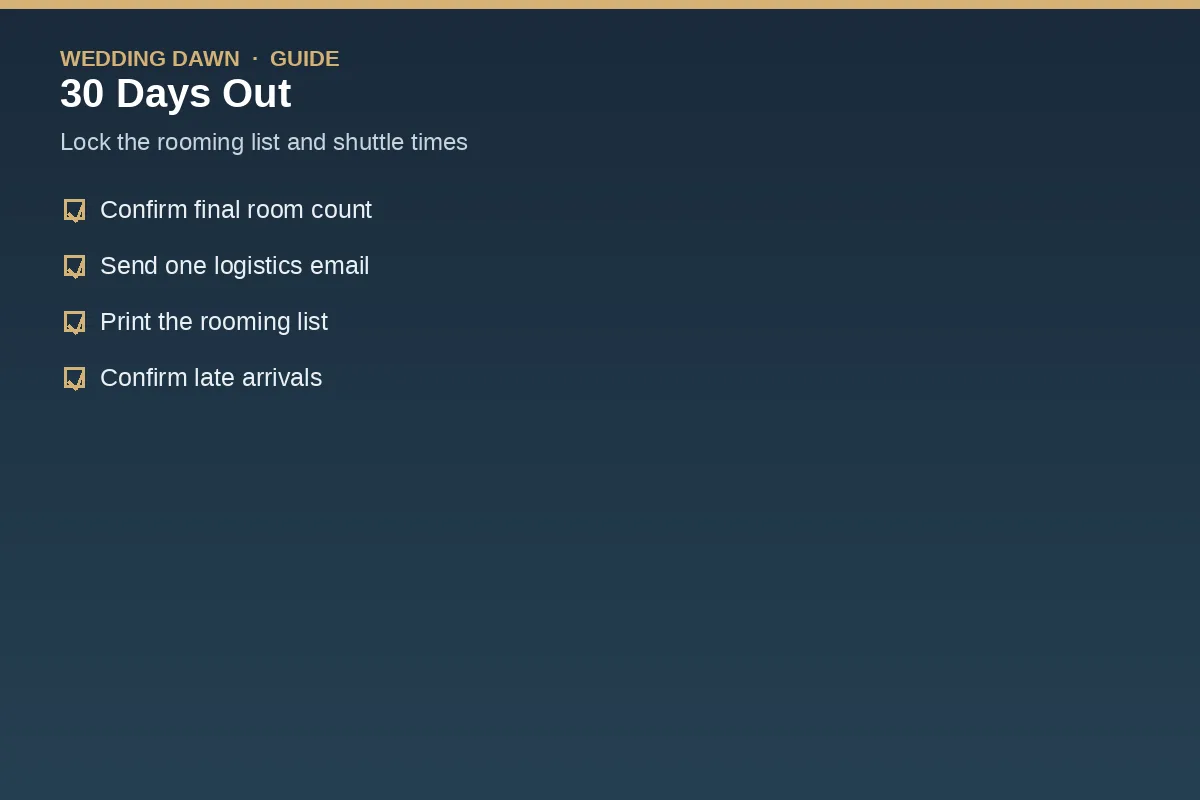
Thirty days before the wedding, send a final logistics email: addresses, check-in times, shuttle pickup points, dress code, and a contact number. Confirm the hotel knows about welcome bags and late arrivals. Print a rooming list for the coordinator and keep a digital copy.
Booking tips
Book early, especially for peak wedding weekends. Ask the host or property manager about early check-in and late check-out options. Confirm that the property can accommodate your guest list without exceeding occupancy limits. Get everything in writing, including cancellation policies and what is included (linens, towels, cleaning fees).
Finally, visit or video-call the property before you sign. Photos hide thin walls, tired carpets, and a lobby that doubles as the only breakfast space. Ten minutes of video is worth an hour of scrolling reviews.
Accessibility and quiet rooms
Ask which rooms are step-free, how far they are from the lift, and whether the bathroom has a walk-in shower. Older guests and anyone with a pram will notice a long corridor more than a stylish lobby. Then ask for quiet rooms away from the bar, the road and the function space, and confirm that the block rate includes breakfast and taxes. Put the answers in the same email thread so the property cannot quietly change them later.
How to choose wedding accommodation
Define your guest list and budget
Know how many people need rooms and what you can afford per night.
Choose between hotels, rentals, and homes
Hotels offer convenience; rentals offer space and savings; homes offer a personal touch.
Compare options by capacity and cost
Create a spreadsheet with price, capacity, amenities, and notes for each property.
Check amenities and policies
Look for kitchens, shuttles, parking, and rules on noise and curfew.
Book early and confirm details in writing
Lock in rates, room blocks, and cancellation policies before you pay.
Wedding accommodation checklist
- Guest count and budget confirmed.
- Type of accommodation chosen (hotel/rental/home).
- Group rate or special offer secured.
- Shuttle service to ceremony and reception confirmed.
- Kitchen and amenities verified.
- Parking and accessibility checked.
- Noise and curfew policies reviewed.
- Everything in writing: rates, cancellation, inclusions.
FAQ
What is the best accommodation option for wedding guests?
Hotels are usually the best choice for convenience and coordination, especially for out-of-town guests. Rentals work well for large groups or families who want more space.
How far in advance should I book wedding accommodation?
Book as early as your guest list is firm, ideally 6 to 12 months out for peak season dates.
Can I mix hotels and rentals for different guests?
Yes, you can assign different types to different groups based on their needs and preferences.
What should I look for in a wedding hotel block?
Look for group rates, room blocks, shuttle service, and flexibility for changes. Ask if the hotel has experience hosting weddings.
Are Airbnb rentals allowed for wedding guests?
Most are, but confirm with the host that the property can accommodate your guest list and that outside vendors are allowed if needed.
How do I handle parking for guests staying off-site?
Confirm parking availability and arrange shuttles if needed. Provide clear directions and parking passes if possible.
Sources
- The Knot 2025 Wedding Guest Survey Accommodation preferences and booking lead times, checked 2026-10.
- WeddingWire Guest Experience Report Hotel vs rental feedback and cost breakdowns, checked 2026-10.
- Zillow Wedding Rentals Guide Average rental costs and guest capacity, checked 2026-10.