Groom and Groomsmen Attire Guide
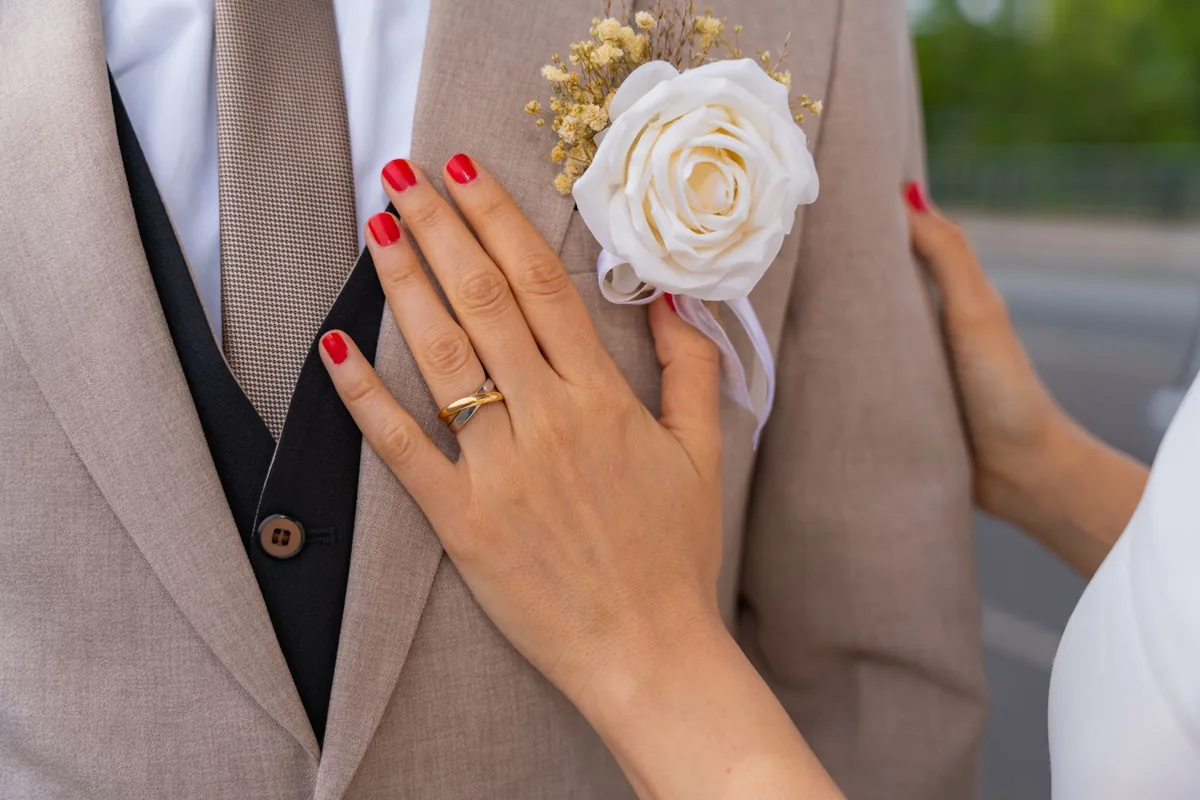
By the time the photos are sorted, the groom's outfit appears in almost as many frames as the dress. It is also the outfit guests judge on fit alone, because there is no tulle, beading or train to distract the eye - a suit either sits correctly on the shoulders or it does not. That is why the order of decisions matters: settle the level of formality first, choose the colour and fabric second, and leave tailoring for last, once you know what you are tailoring.
This guide walks through that sequence for the groom and the groomsmen, with the practical questions that actually change the result: how formal, how fitted, what season, who pays, and what to fix before the day.
Start with the level of formality
Every other choice - colour, fabric, even whether you wear a tie - is downstream of the dress code printed on the invitation. If the invitation says black tie, the groom and groomsmen wear tuxedos: black or midnight-blue jackets, satin or grosgrain lapels, a matching bow tie, braces instead of a belt, and patent or highly polished shoes. If it says formal or cocktail, a well-cut dark suit is correct and a tuxedo would look overdressed. Semi-formal or smart-casual weddings open the door to lighter fabrics, no tie, and even a jacket in a warmer tone. Beach and destination weddings usually call for linen or a lightweight wool in a light colour, with closed-toe shoes and a relaxed collar.
When the invitation is silent, match the venue and the hour: a formal ballroom or cathedral at six in the evening reads more formal than a garden lunch, and it is easier to be slightly overdressed than underdressed. Ask the couple or the planner what the wedding party is wearing before you buy anything.
Fit is the whole game
A modest suit that fits well photographs better than an expensive suit that does not. Four measurements decide this. The shoulders: the seam should end where your shoulder ends, with no divot and no overhang. The sleeve: it should show about one to one and a quarter centimetres of shirt cuff. The jacket length: it should reach roughly to the knuckles and cover the seat. The trouser break: one soft fold resting on the shoe, with no puddle around the ankle.
Off-the-rack plus a good tailor is the value route and works for most grooms; budget four to six weeks for alterations and a final fitting one or two weeks before the wedding. Made-to-measure, where your measurements adjust an existing block, costs more and needs eight to twelve weeks. Full bespoke is a months-long process. Whatever the route, do not gain or lose significant weight after the final fitting.
Colour, fabric and the season
For a classic wedding, navy and charcoal are the safest and most flattering, and they photograph well in both daylight and flash. Grey works for daytime and summer; brown and earthy tones suit autumn and rustic venues. Black is reserved for evening and black tie, and midnight blue is the classic tuxedo alternative because, under artificial light, it photographs blacker than black.
Fabric follows the season. Heavy wool and flannel hold their shape in cold weather; high-twist wool is the all-rounder; linen and cotton-linen blends breathe in heat but crease, which is part of their look. A wool-silk blend gives a subtle sheen for evening. Coordinate rather than match with the wedding palette: pick a tone that sits beside the bridesmaids' colours instead of copying them exactly.
Shirt, tie and the details that show in photos
The shirt is the frame for the face, so keep the collar crisp and appropriate: a spread collar for a wide face and a larger knot, a point collar for narrow faces and slim ties. Button cuffs are fine for daytime; French cuffs with cufflinks read more formal.
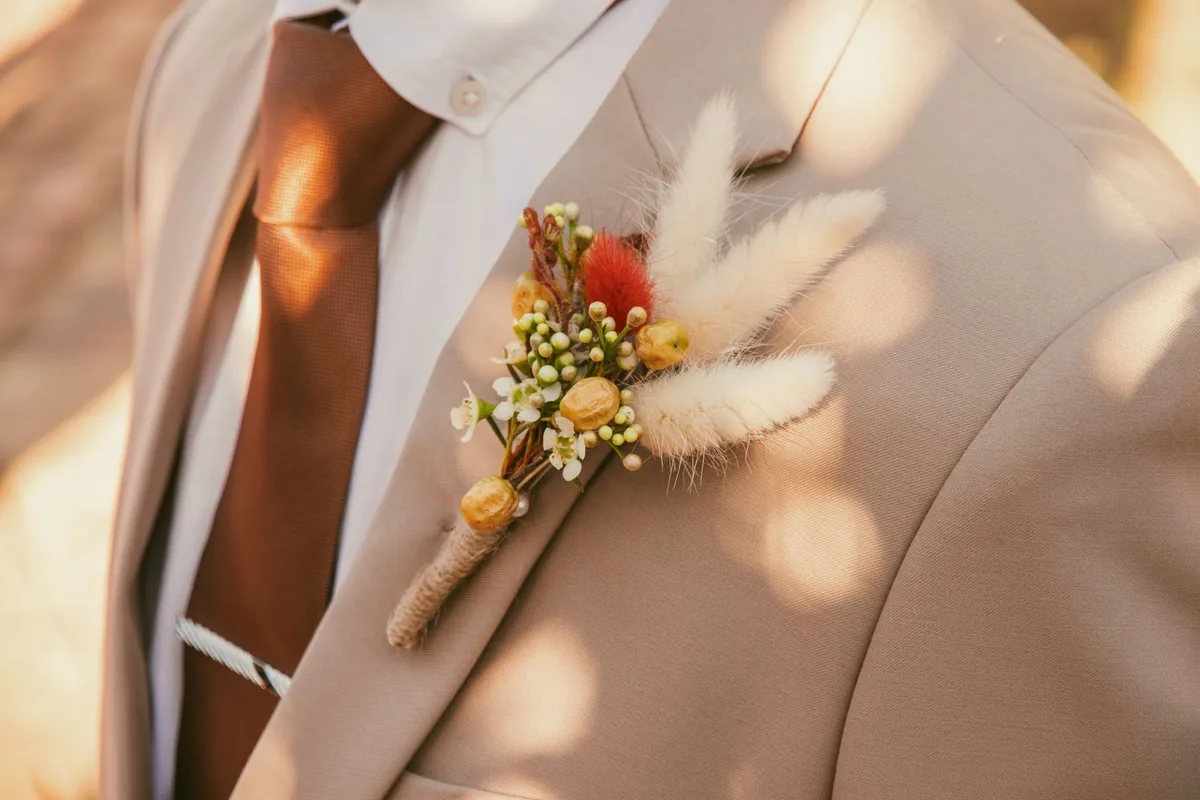
For neckwear, a bow tie is more formal and stays out of the way during photographs and toasts; a long tie is easier and more versatile. Match the tie width to the lapel width - both roughly eight centimetres - and pick a knot that fills the collar. Add a pocket square, but keep it simple: a flat fold in white or a single accent colour that echoes the bouquet. Wear over-the-calf socks in a colour that continues the trouser, not the shoe, and finish with polished leather shoes; lace-ups are more formal than loafers.
Dressing the groomsmen
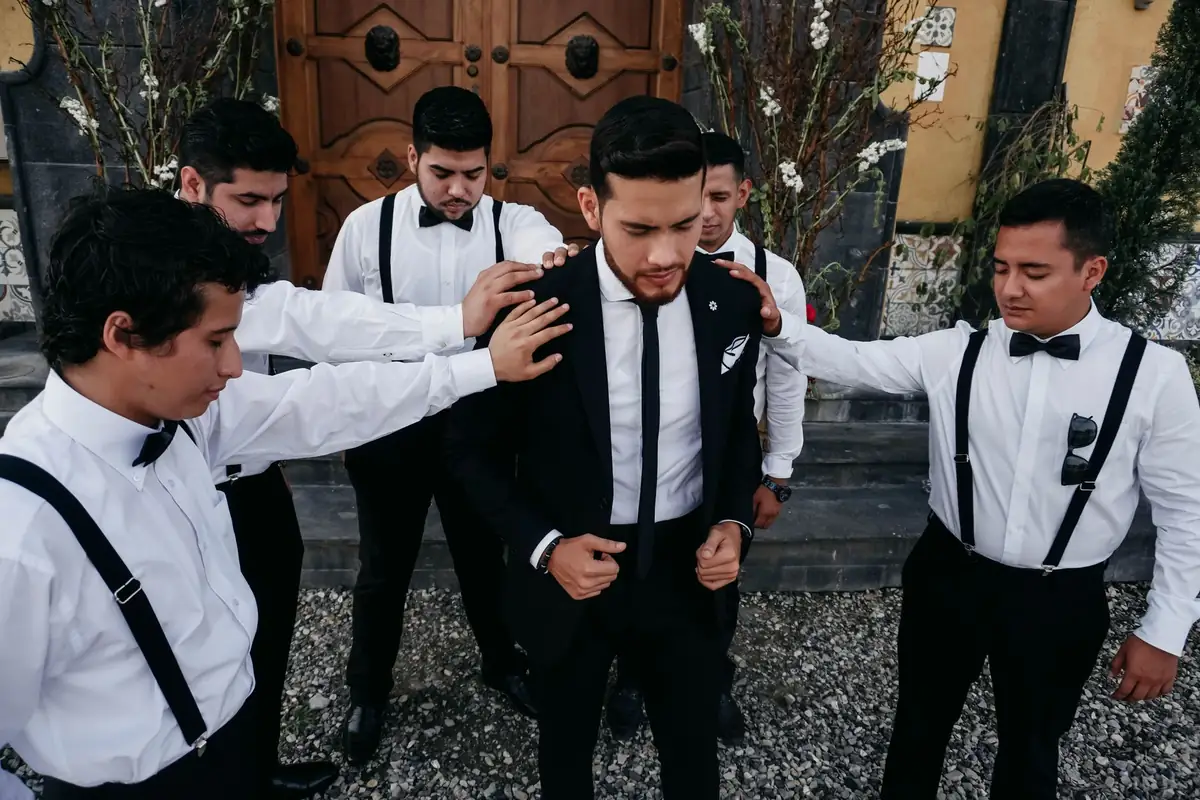
The groomsmen should look like a set, not copies of each other. Give them a frame of reference - suit colour, shirt and shoe - and one or two variables: the groom might wear an ivory tie or a different buttonhole while the groomsmen wear matching ties, or the groom wears a bow tie and the party wears long ties. This keeps the groom visually distinct in group photographs.
Decide early whether they buy or rent, and be explicit about budget, because groomsmen pay for their own outfits in most Western weddings. Rental keeps costs predictable and guarantees matching fabric; buying gives a wearable suit but risks slight colour differences between makers. Send measurements well ahead, and ask everyone to have shoes polished and socks of the agreed colour.
Weather, venue and comfort
An outdoor summer ceremony is the hardest test for formal wear. Choose a breathable fabric, skip the waistcoat if the ceremony is in full sun, and keep a spare shirt because the first one will not survive the humidity. Carry a lint roller and blotting sheets. In cold weather, a waistcoat adds warmth without bulk, and a well-chosen overcoat photographs better than a puffer jacket. Whatever the season, break in your shoes for at least a week before the wedding - new leather on a long day is the most common source of visible discomfort.
Budget and timeline
Set the budget alongside the formality decision, not after it. A reasonable split many couples use is to spend on fit and shoes, where quality shows, and to save on the jacket's hidden construction if the wedding is daytime and outdoors. Buy or reserve the outfit three to four months before the date so there is time for alterations. Book the final fitting for one to two weeks before, and collect everything - including the tie, cufflinks and shoes - a few days before so nothing is missing on the morning.
Common mistakes: a quick checklist
- Choosing the suit before knowing the dress code - the most expensive mistake.
- Ignoring the shoulder line because it 'can be fixed' - it usually cannot.
- Matching the bridesmaids' colour exactly instead of coordinating a tone.
- New, unbroken-in shoes on the wedding day.
- Different shades of the same colour across the party after separate purchases.
- Forgetting the details that appear in every photo: socks, belt, cufflinks, buttonhole.
- Skipping the final fitting in the last fortnight.