Hiring a Wedding Photographer
Hiring a wedding photographer is one of the few vendor decisions you cannot redo after the day is over. The cake gets eaten, the flowers wilt, the music fades, but the photographs are the one deliverable that outlives the event and becomes the way you remember it for decades. That makes the choice less about finding the cheapest camera and more about matching a working style, a compatible personality, and clear contract terms to the kind of day you are actually having. This guide walks through how to shortlist, vet real portfolios, compare packages by what you receive, build a shot list together, and read the contract so you book someone who delivers the photos you actually wanted rather than the ones you assumed you would get.
Decide the style before you shop
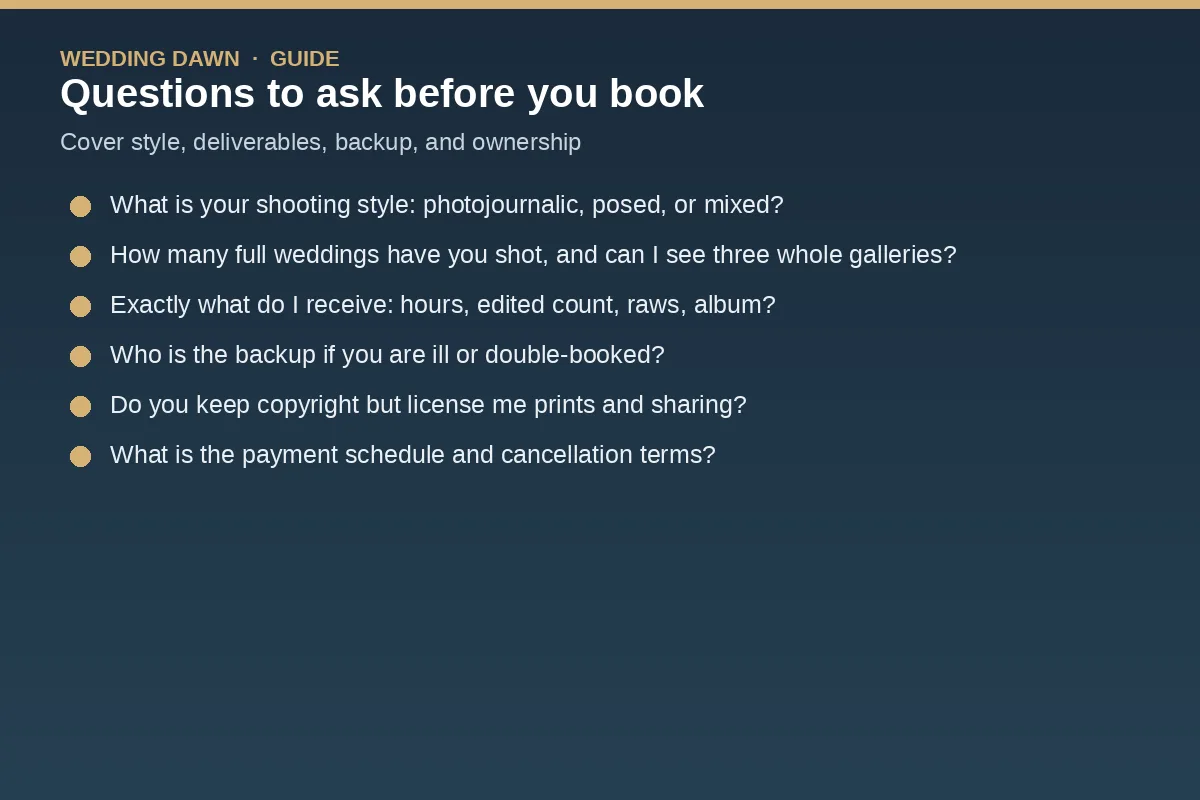
Before you open a single portfolio, decide which kind of presence you want in the room. Some photographers work almost invisibly, drifting through the day and catching the in-between: a grandmother fixing a veil, a father blinking back tears during the toast, the flower girl asleep under a table. Others direct gently, arranging groups and shaping portraits so every frame looks considered. A third mode borrows from magazines: strong light, clean lines, a stylised couple's session at sunset. Most portfolios mix all three, which is why labels tell you less than two complete weddings. Ask for full galleries, not the ten best images, and choose weddings that resemble yours in venue, season, and guest count. Then write down what you keep returning to. That list, not the style name, is what you should describe on the first call.
- Documentary: unposed, follows the day as it happens.
- Directed: gentle guidance for groups and portraits.
- Editorial: styled light, fashion-like couple frames.
- Judge by two full galleries, not the best ten images.
Shortlist by real weddings, not by highlights
A highlight reel of ten pretty frames tells you almost nothing about how someone handles a dim church, a loud reception, or a runaway timeline. Ask every candidate for three full galleries from real weddings as similar to yours as possible: same venue type, same light, same size. Watch how they cover the boring-but-important parts, the guests arriving, the speeches, the quiet gaps, because that is where weaker photographers fall apart. Confirm they have shot your kind of ceremony, especially if yours is outdoors, religious, or in tricky light, and ask what backup gear they carry when a camera or flash fails mid-event. A photographer who gladly shows whole galleries is usually confident for a reason.
Early warning signs are usually conversational rather than technical. A slow, generic reply, a portfolio shot entirely in perfect evening light, an evasive answer about how many weddings they personally photographed this year, or no curiosity about your venue's room layout. The strongest candidates turn the call around: they ask where the ceremony starts, when the light drops, which relatives need handling, and what could make the day run late. Hire the person who asks better questions, not the one with the loudest feed.
Compare packages by deliverables, not by price
A quote is a summary; the value hides in the details underneath. What counts: the actual shooting window (arrival to last dance, not a vague 'eight hours'), whether a second photographer is on the floor, how many finished images arrive, whether printing rights come with them, when delivery lands, and which extras are folded in versus billed later. Two offers can look identical at the headline and differ by a whole evening of coverage, or by an album that costs extra at the end. Ask each studio for the same one-page breakdown: hours, people, image count, delivery date, extras, travel, overtime rate. Put the pages side by side and the cheaper option often stops looking cheap.
- Shooting window: arrival through last dance, in writing.
- Second photographer on the floor, not just promised.
- Finished image count and a delivery date you can hold them to.
- Travel, overtime, album and print costs kept out of the headline.
Build a shot list together
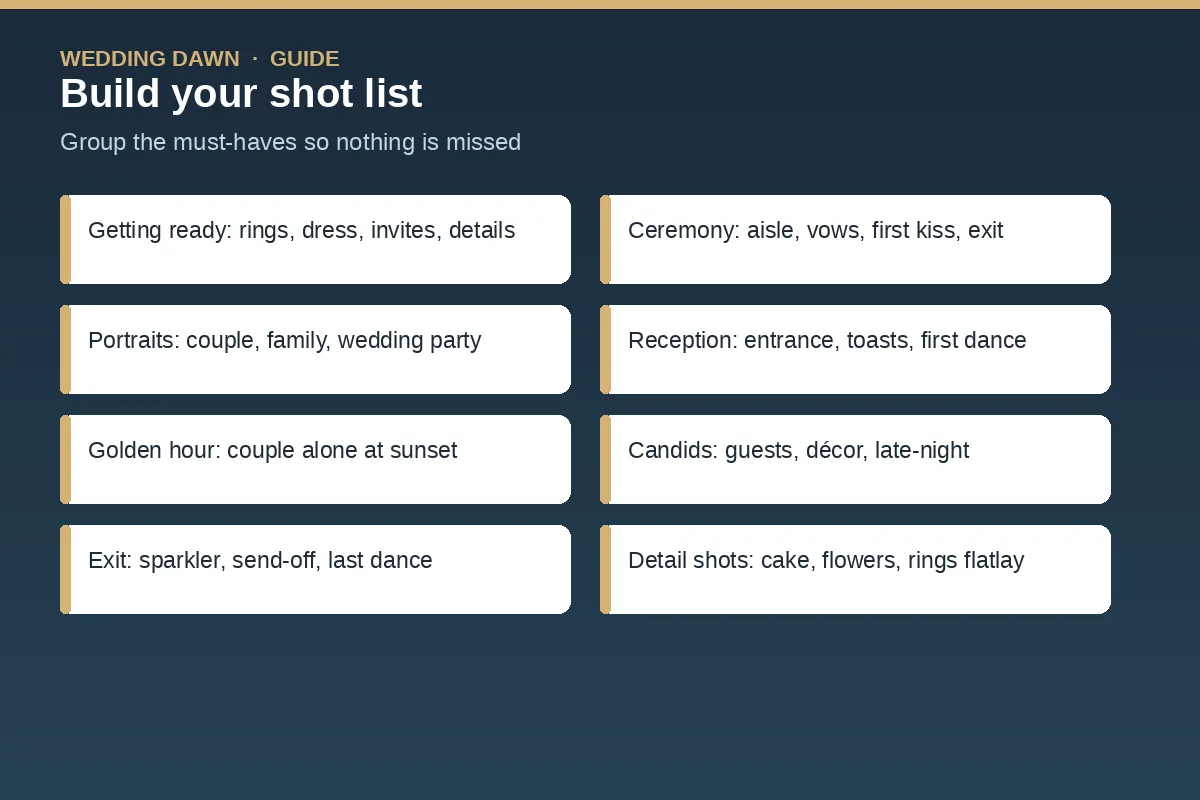
Even the best photographer cannot read your mind about which relatives must appear in a frame. Sit down with your partner and list the must-have groupings: both families, each side with the couple, the wedding party, and any grandparents or step-family that need a place of honor. Send this list to the photographer a week before, and assign a relative or planner to help round people up so the formal block stays under twenty minutes. Beyond formals, note the candid moments you will regret missing, the toast, the first dance, the quiet hug with a parent, and if you want golden-hour couple portraits, block that light into the timeline before the sun decides for you.
Read the contract for these clauses
Read the agreement before any deposit leaves your account, and read it as a list of promises rather than paperwork. Four areas decide most disputes. Usage: who can print, post, and share the images, and for how long. Money: the payment plan, what happens if you move the date, and whether the fee is fixed or indexed to travel costs. Continuity: the named substitute if your photographer is ill, and how quickly you would be told. Delivery: a calendar date for the gallery, the file format, and what happens if a card fails or a drive dies. Each of those should appear as a sentence you can point to, not a verbal assurance. Anything agreed on the phone, extra hours, a second shooter, an album upgrade, belongs in the document before you sign.
- Print, post and share permissions written into the agreement.
- Payment plan plus what happens if you move the date.
- A named substitute and notice period for illness.
- Gallery deadline, file format, and backup for lost files.
Schedule the light, not just the clock
Great wedding photos are often a scheduling decision more than a camera decision. If you want golden-hour portraits, look up sunset for your date and city, and protect that window in the run sheet even if it means pulling the couple out of the reception for ten minutes. A first look before the ceremony can buy you calmer portraits and free up cocktail hour for guests. Tell the photographer your timeline in advance so they can plan where they need to be for each light change, and trust them to quietly redirect when the day runs long; the couples who end up with the photos they love are usually the ones who gave the photographer a real plan and then let them work.
Mistakes that quietly cost you photos
Most disappointments trace back to the booking, not the photographer's eye. Choosing on the headline number and later finding the coverage stops before the dancing. Skipping a video call and meeting a stranger on the morning of the wedding. Arriving without a family shot list, then spending the cocktail hour collecting cousins. Forgetting to mention a divorced parent, a fragile grandparent, or a sibling who will not pose next to someone. Ignoring the sunset time and losing the only twenty minutes of golden light. Assuming the photographer will recognize which uncle matters. None of this is about talent. It is about the brief you build in advance, and that brief is the entire point of hiring carefully.
What to confirm in the final month
Send a one-page brief four weeks out: the run sheet, the family combinations, the names of the people who must be in photographs, and the two or three moments you cannot miss. Ask the photographer to confirm the arrival time, the second shooter, the backup camera body and where the files will be stored after the wedding. A short written reply closes more gaps than another hour of email discussion, and it gives you something to check on the morning itself.
Step by step
Clarify your style
Pull three weddings you love and name the style you want before contacting anyone.
Collect full galleries
Ask each candidate for three complete real-wedding galleries similar to yours.
Compare deliverables
Line up hours, edited count, second shooter, raws, and turnaround in writing.
Build the shot list
List must-have groupings and candid moments, and send it a week ahead.
Sign with eyes open
Read copyright, deposit, backup, and cancellation clauses before you pay the deposit.
Quick checklist
- Matched the photographer's style to how you want to remember the day.
- Reviewed at least three full galleries, not just highlights.
- Confirmed deliverables: hours, edited count, second shooter, raws, turnaround.
- Sent a family-formals and must-have shot list one week before.
- Read copyright, deposit, backup, and cancellation clauses in the contract.
FAQ
Do I really need a second shooter?
Not always, but a second shooter captures both sides of the aisle, the reception room before guests enter, and candids while the main photographer is busy with formals. For weddings over about 120 guests or with a tight timeline, it is usually worth it.
Should I book an engagement session?
It is the best low-pressure rehearsal for how you both act in front of a lens, and it builds rapport before the day. If it is included or cheap, take it; if not, a short walk with any camera helps you learn what poses feel natural.
What does 'copyright retained' mean for me?
The photographer keeps the legal copyright but almost always grants you a license to print and share the edited photos for personal use. You usually cannot sell or enter them in contests without permission. Get the license terms in writing.
How long until we get the photos?
Turnaround commonly runs four to twelve weeks. A written guarantee with a date protects you; a vague 'soon' does not. Ask what happens if they miss the deadline.
What if the photographer is ill on the day?
A professional should have a vetted backup network and state in the contract who shoots if they cannot. Never assume; confirm the clause and a named fallback before you sign.
Sources
- PPA — Professional Photographers of America, hiring guides Trade-body guidance on contracts, copyright, and what to ask a wedding photographer; checked 2026-11.
- WeddingWire — vendor contract checklist Common clauses and red flags in photography contracts; checked 2026-11.
- The Knot — questions to ask wedding photographers Interview question lists and deliverable comparisons; checked 2026-11.