The Tuesday Tide Table
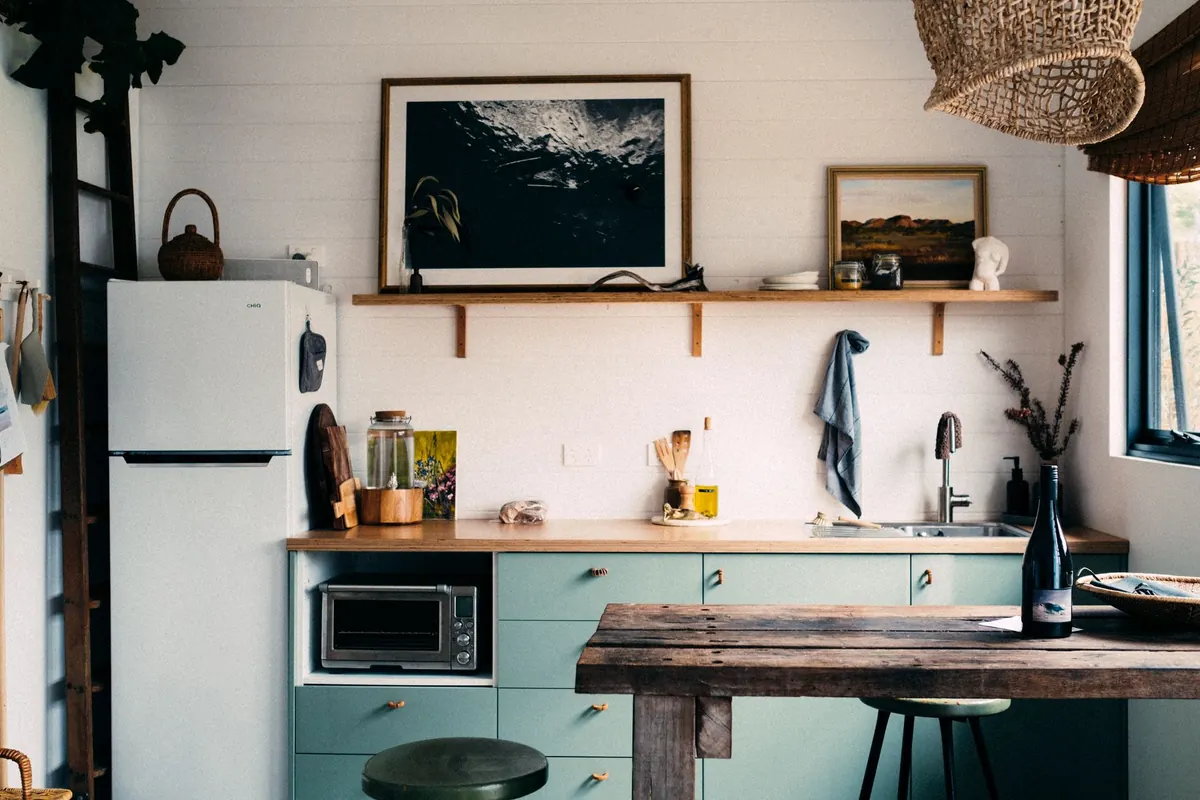
The tide table on the fridge had been there since 2019, when Ewan still worked the morning shift at the harbor and Marnie ran the bakery on Shore Street. It was a freebie from the chandlery, printed in blue ink that had faded to gray, and it listed high and low water for every day of that year. Ewan had circled Tuesdays in red pen. Not because of the tides, but because Tuesdays were the one morning Marnie didn't open the shop until ten.
They had met on a Tuesday, in the queue at the fishmonger's. She was buying a whole haddock for a customer's order and he was buying nothing, just standing there because he'd finished his shift and didn't want to go home to an empty flat. She turned around and asked if he was going to take the last of the mackerel. He said he wasn't sure. She said, 'Well, decide, because I've got forty sausage rolls to glaze.' He took the mackerel.
That was in March. By June they had a routine. He'd finish at the harbor at six, walk up to the bakery, and sit on the low wall outside with a coffee until she locked up at half past. They'd walk down to the promenade and eat chips out of paper, watching the ferries come in. She was thirty-four and he was thirty-nine, and neither of them had much to say about the past. They talked about the weather, mostly. And the gulls.
The proposal, when it came, was not a proposal so much as a practical decision. They were in the kitchen of her flat, the one above the bakery, and the boiler had broken. She was sitting on the floor with a towel around her hair, and he was on his knees with a torch, looking at the pilot light. He said, 'We should get a place with a better boiler.' She said, 'Are you asking me to move in, or to marry you?' He said, 'Both, I think.' She said, 'All right, then.'
They married in the registry office in October, with two witnesses and a lunch at the pub afterwards. Her mother cried. His brother made a speech that was mostly about a boat. They had a cake from the bakery, of course, a small one with white icing and a single sugar gull on top. Marnie had made it herself the night before, and she was so tired by the ceremony that she fell asleep in the taxi home.
The tide table came later, when they moved into the house on Wellington Road. It was a two-up, two-down with a yard out back and a leak in the roof that Ewan never quite fixed. The tide table was already there, stuck to the fridge with a magnet shaped like a lifebuoy, left by the previous owner. Ewan meant to take it down. He never did.
Instead, he started circling Tuesdays. At first it was a joke, a way of marking the one day Marnie didn't have to be at the bakery at five. But then it became a habit, and then it became something else. He'd circle the date on Sunday night, and on Tuesday morning he'd make a pot of tea and leave it on the counter, and she'd come down at half past eight and they'd sit at the kitchen table for twenty minutes before she had to leave.
Those twenty minutes were not always easy. They were tired, often. There were bills, and a leak in the roof, and her mother's hip operation, and his brother's divorce. Sometimes they didn't talk at all. He'd read the paper and she'd scroll through her phone, and the only sound was the kettle cooling down. But they were there. That was the point.
The small turn came in 2023, when the bakery nearly closed. A chain opened a branch on the high street, and Marnie's custom dropped by half in a month. She didn't tell him at first. She kept opening at five and closing at four and coming home with a face that was too still. He noticed, because he noticed most things about her, but he didn't push.
Then one Tuesday, she didn't come down at half past eight. He waited until nine, then went up. She was sitting on the edge of the bed, still in her dressing gown, staring at the wall. She said, 'I think I'm going to lose it.' He sat down next to her. He said, 'Then we'll lose it together.' She said, 'That's not a plan.' He said, 'No. But it's true.'
They didn't lose it. She cut the opening hours, dropped the wholesale orders, and started doing a Saturday market stall instead. It was lean for a year. They ate a lot of soup. But the Tuesday mornings stayed, even when she had to go in at nine instead of ten. He'd still make the tea. She'd still sit down. Sometimes for ten minutes, sometimes for five.
The tide table is still on the fridge, though the blue ink has gone almost white. The year 2019 is meaningless now, and the tide times are wrong by several hours. Ewan knows this. He has a tide app on his phone, and he checks it before he goes out on the water. But he keeps the paper one because it's the only calendar in the house that has Tuesdays circled in red pen, one by one, all the way to December.
Marnie teases him about it. She says it's hoarding. She says he's one step away from keeping old receipts. He says it's not hoarding, it's a record. She says, 'A record of what?' He says, 'Of Tuesdays.' She rolls her eyes, but she doesn't take it down.
Last Tuesday, they sat at the kitchen table as usual. It was raining, and the yard was full of puddles, and the roof was leaking again in the corner. She had a list of orders for the market, and he had a list of jobs for the harbor. They didn't say much. She reached across and took a piece of his toast without asking. He moved the plate closer to her.
After she left, he washed up and looked at the tide table. He circled the next Tuesday, the 17th of November, in red pen. Then he wrote a small note in the margin, in pencil, so she wouldn't see it unless she looked closely. It said: 'High water 6:42. Tea at 8:30.'
They are not the kind of couple who say 'I love you' a lot. They say it in other ways: a cup of tea left on the counter, a piece of toast shared without asking, a Tuesday circled on a faded tide table. It's not much. But it's theirs, and it's held for seven years, and it will hold for a few more yet.